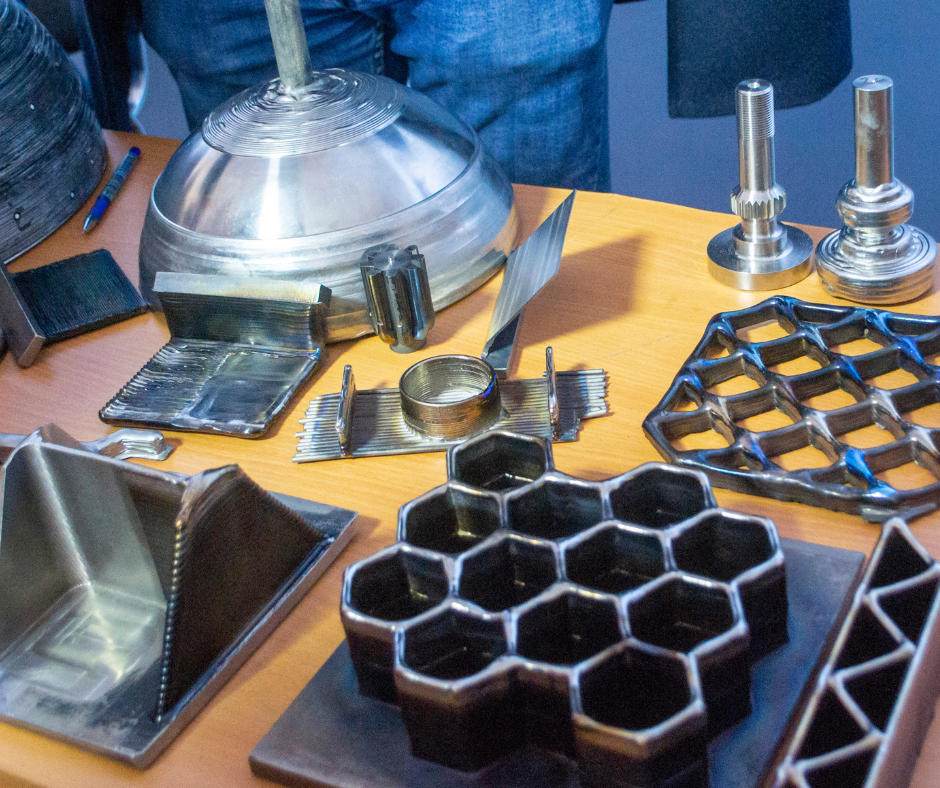
Additive manufacturing—commonly known as 3D printing—has evolved from a rapid prototyping technique into one of the most transformative forces in modern engineering. Its ability to produce complex, high-performance metal components layer by layer has reshaped how industries design and build materials. Recent 3D printing innovations have accelerated this transformation, bringing new materials, hybrid systems, and large-scale applications that push the boundaries of what manufacturing can achieve.
From aerospace to healthcare, 3D metal printing now plays a vital role in creating components that are lighter, stronger, and more efficient. The latest developments are not just improving manufacturing efficiency—they are redefining how products are designed, tested, and optimized for real-world performance.
The foundations of additive manufacturing
At its core, additive manufacturing builds components by adding material layer upon layer using computer-aided design (CAD). Unlike traditional subtractive methods, which cut material away, this technique minimizes waste while maximizing precision.
Metal 3D printing typically uses techniques such as laser powder bed fusion (LPBF), electron beam melting (EBM), and binder jetting to create intricate geometries with remarkable accuracy. The result is a fully customized part that can be optimized for weight, strength, and performance.
The latest 3D printing innovations have focused on increasing speed, improving accuracy, and enhancing the microstructure of printed metals. These advancements are allowing manufacturers to scale from prototypes to full production with consistent quality.
For a deeper look into the technology shaping modern metal printing, you can explore progress in additive manufacturing and learn how it drives performance and reliability in industrial production.
Material breakthroughs fueling 3D printing innovations
The materials used in additive manufacturing have advanced significantly, enabling stronger and more reliable printed parts. Early 3D printers relied heavily on polymers, but today’s systems can process high-performance metals and composites used in critical applications.
Some of the most notable developments include:
- Advanced metal alloys: Titanium, stainless steel, and nickel-based superalloys provide superior strength-to-weight ratios and corrosion resistance.
- High-conductivity materials: Copper and tungsten are increasingly used in applications requiring excellent electrical or thermal conductivity.
- Multi-material printing: This innovation allows different materials to be combined within one build, creating components with integrated functionality—such as cooling channels or graded mechanical properties.
These material innovations lie at the heart of current 3D printing innovations, expanding the possibilities of design and functionality across industrial sectors.
Hybrid manufacturing: merging tradition with innovation
As additive manufacturing matures, hybrid systems that combine additive and subtractive methods have become more common. These systems allow manufacturers to 3D-print parts and then machine them within the same setup, ensuring perfect dimensional accuracy and surface finish.
Hybrid manufacturing bridges the gap between the flexibility of 3D printing and the precision of traditional machining. It supports greater design freedom, reduces handling time, and allows for more efficient 3D printing innovations to reach the production stage.
By uniting both processes, manufacturers can achieve the best of both worlds: speed and accuracy. This combination makes hybrid manufacturing one of the most promising trends in the industrial evolution of additive manufacturing.
Industrial adoption and large-scale applications
The industrialization of additive manufacturing is no longer a future concept—it’s happening now. The latest 3D printing innovations are being adopted in major industries that demand reliability, precision, and performance.
Key sectors leading the way include:
- Aerospace and defense: Lightweight structural parts, fuel nozzles, and turbine blades benefit from reduced weight and improved performance.
- Automotive manufacturing: Rapid prototyping, tooling, and even functional metal components can now be produced in shorter development cycles.
- Medical technology: Custom implants and prosthetics made with 3D printing offer better fit, biocompatibility, and faster production times.
- Energy production: Turbine and reactor parts created through 3D printing are designed to withstand high temperatures and extreme conditions.
These applications show how 3D printing innovations are transforming production capabilities across sectors once dominated by traditional fabrication methods.
Research and technological progress
Continuous research is at the core of ongoing 3D printing innovations. Engineers are focusing on improving print quality, material properties, and process consistency.
Advances in laser powder bed fusion (LPBF) and electron beam melting (EBM) have made it possible to achieve denser, stronger, and more uniform parts. Meanwhile, AI-powered process monitoring ensures real-time control over every stage of printing, minimizing defects and improving repeatability.
Generative design tools—powered by artificial intelligence—are also revolutionizing the design process. These tools automatically create lightweight geometries that maintain or even enhance structural strength. When combined with additive manufacturing, such designs are both efficient and high-performing.
Further insights into emerging research and industrial breakthroughs can be found in progress in additive manufacturing, where the latest data-driven developments are helping redefine modern engineering standards.
Sustainability and environmental benefits
A major advantage of 3D printing innovations lies in their environmental impact. Additive manufacturing is inherently more sustainable than traditional methods since it produces less waste and supports localized production.
Another environmental benefit is material efficiency. Unused metal powders or polymers can often be recycled directly back into the production cycle, reducing resource consumption and costs. The ability to print lightweight designs further contributes to energy savings, particularly in transport industries like aerospace and automotive manufacturing.
As global industries focus more on eco-friendly manufacturing, 3D printing innovations are paving the way toward cleaner, smarter, and more efficient production methods.
Frequently asked questions
What are the main advantages of additive manufacturing?
It allows the production of complex geometries, reduces material waste, and enables design freedom that traditional manufacturing cannot match.
How do 3D printing innovations influence cost efficiency?
They lower production costs by minimizing waste, shortening development cycles, and reducing the need for expensive tooling.
Can 3D-printed metals be as strong as forged metals?
Yes. With proper post-processing methods like hot isostatic pressing, 3D-printed metals can achieve comparable or even superior mechanical properties.
Which industries benefit most from additive manufacturing?
Aerospace, medical, automotive, and energy sectors are leading adopters due to the demand for lightweight, durable, and customized parts.
What challenges remain in 3D metal printing?
Current challenges include maintaining consistent quality, improving surface finish, and lowering the cost of metal powders, but ongoing 3D printing innovations continue to address these issues.
The future of 3D printing innovations
The pace of 3D printing innovations shows no signs of slowing. The next generation of additive manufacturing will focus on faster printing speeds, multi-material capabilities, and greater integration with artificial intelligence and robotics.
These advancements will enable full automation of design-to-production workflows, creating smarter and more adaptive manufacturing systems. Sustainability will also play a central role, as recyclable materials and energy-efficient printers become standard.
Ultimately, the ongoing progress in additive manufacturing marks a turning point in how products are designed and produced. By embracing this technology, industries worldwide are unlocking new levels of performance, customization, and efficiency—paving the way for a future where manufacturing is smarter, cleaner, and infinitely more innovative.